S2Cool – Super-efficient Sustainable Cooling Solutions for All Applications

01

Synopsis

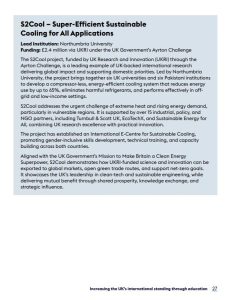
The S2Cool Project is a £2.8 million UKRI Ayrton Challenge–funded initiative developing super-efficient, climate-resilient, and affordable cooling solutions for heat-vulnerable regions, with a primary focus on Pakistan.
Led by Northumbria University (UK) in partnership with leading UK and Pakistani universities, industry, and international organisations, S2Cool addresses the rapidly growing cooling demand driven by extreme heat, energy poverty, and climate change.
S2Cool delivers locally co-created, refrigerant-free and renewable-ready cooling technologies, supported by AI-enabled optimisation, strong capacity building, and inclusive impact frameworks.

S2Cool at a Glance

PROJECT VALUE
£ 0 M

UKRI Ayrton Challenge funding for super-efficient sustainable cooling

WORKSHOP PARTICIPANTS
0 +

engaged through structured capacity-building activities

WEBINAR PARTICIPANTS
0

connected globally through S2Cool Innovation Hour sessions

WOMEN PARTICIPANTS
0

actively engaged in training, outreach, and innovation activities

Why Sustainable Cooling Matters

50+ °C

EXTREME HEAT EVENTS

recorded in Pakistan, exposing millions to life-threatening indoor temperatures and making cooling a basic need for health, productivity, and survival.

60%

ENERGY SAVINGS POTENTIAL

through super-efficient cooling technologies such as NIEC, reducing electricity demand, grid stress, and cooling-related emissions compared to conventional air conditioning.

100%

REFRIGERANT-FREE COOLING

eliminating high-GWP refrigerants while supporting climate-resilient, low-carbon cooling aligned with SDGs 7 (Clean Energy) and 13 (Climate Action).

What S2Cool Delivers

S2Cool develops and validates a new generation of super-efficient cooling systems, centred on:

  • Novel Indirect Evaporative Cooling (NIEC)
  • Hybrid NIEC + Mechanical Vapour Compression (MVC) systems
  • AI-driven optimisation and intelligent control
  • Renewable-powered, off-grid-ready cooling solutions

These systems are designed specifically for hot, humid, and energy-constrained environments.

02

CHALLENGE

Progress towards ensuring access to safe, efficient, and affordable cooling, a critical enabler of health, productivity, and climate resilience, remains dangerously slow. As global temperatures rise, cooling demand is accelerating rapidly—particularly in heat-vulnerable countries such as Pakistan—yet access to modern, energy-efficient cooling solutions remains highly unequal.

Today, hundreds of millions of people are exposed to extreme indoor heat due to inefficient cooling technologies, unreliable electricity supply, and high operating costs. Conventional air-conditioning systems are energy-intensive, expensive to run, and dependent on high-GWP refrigerants, placing significant strain on electricity grids while increasing carbon emissions. Without a fundamental shift away from the status quo, growing cooling demand risks deepening energy poverty, worsening public-health outcomes, and undermining climate action.

The cooling challenge extends beyond technology alone. It reflects systemic market and policy failures that prevent efficient, low-carbon solutions from reaching those who need them most. If unaddressed, the lack of affordable and climate-appropriate cooling will jeopardise progress not only toward SDG 7 (Affordable and Clean Energy), but also SDG 3 (Good Health and Well-Being), SDG 5 (Gender Equality), SDG 11 (Sustainable Cities), and SDG 13 (Climate Action).

Why Sustainable Cooling Matters

Orphaned

Sustainable cooling sits at the intersection of energy, health, housing, and climate policy—yet it is often excluded from dedicated funding streams, regulatory frameworks, and development planning. As a result, cooling remains an “orphaned” challenge with limited coordinated action, despite its growing social and economic importance.
Invisible

The impacts of inadequate cooling—heat stress, reduced productivity, learning disruption, and health risks—are largely invisible in policy and investment decisions, particularly for women, children, and low-income communities. Unlike power generation, cooling demand and its social costs are rarely measured or prioritised.

Expensive

For households and businesses in heat-vulnerable regions, modern cooling is often financially out of reach. High upfront costs, rising electricity tariffs, and inefficient systems make conventional air-conditioning unaffordable, while increasing long-term energy and environmental costs for society.

03

APPROACH & RESULTS

Approach

Climate-Responsive Design

  • Multi-year, multi-city climate datasets across Pakistan
  • Design resilience up to 50 °C operating conditions
  • Climate-informed system sizing and performance optimisation

Super-Efficient Cooling Technologies

  • Standalone NIEC systems with COP 20–25
  • Hybrid NIEC+MVC systems with COP 10–12
  • 60% lower energy consumption compared to conventional cooling
  • 100% refrigerant-free core cooling technology

AI-Enabled Optimisation

  • Machine-learning and deep-learning models for performance prediction
  • AI-based feature importance and system optimisation
  • Solar-cooling integration with AI-based energy forecasting

Renewable-Ready Operation

  • Solar-powered cooling system design (2–3 kW PV for 20 kW cooling)
  • Off-grid and grid-supportive deployment pathways
  • Reduced peak-load stress on electricity networks

Results

S2Cool follows a results-oriented delivery model, ensuring that outcomes are measurable, scalable, and policy-relevant.

Demonstrated Outcomes (Year 1)

  • 60% energy reduction compared with conventional cooling
  • ~50% lower capital and operating costs
  • Up to 60% environmental improvement
  • 100% elimination of high-GWP refrigerants
  • 1–2% additional efficiency gains through AI optimisation
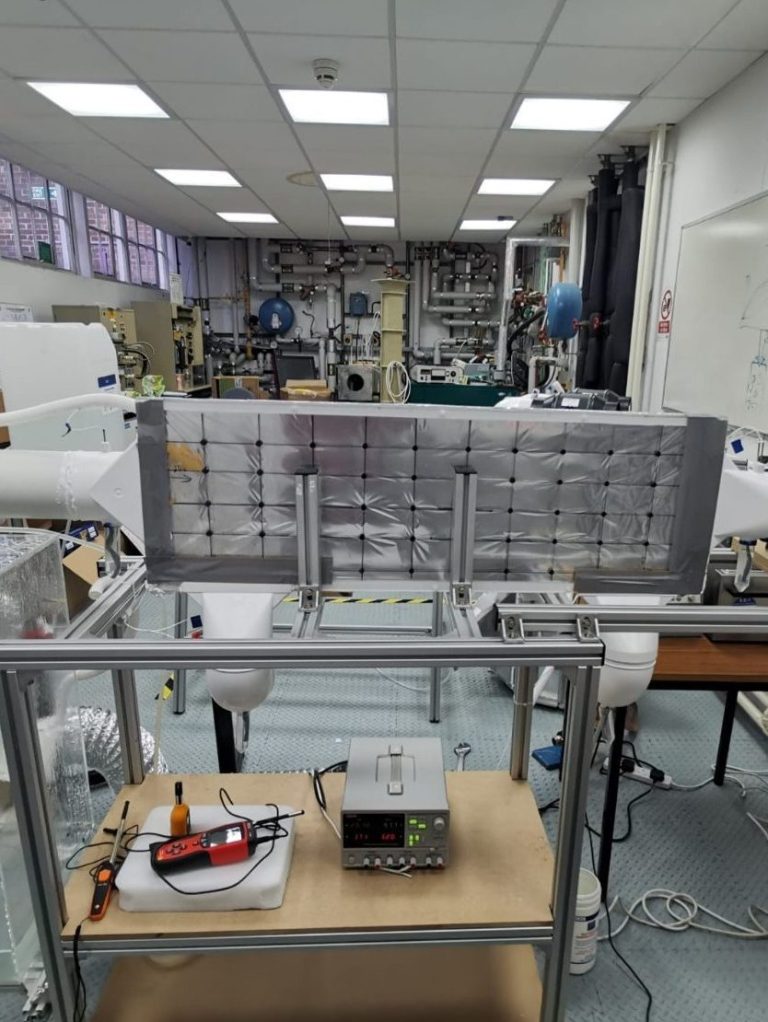
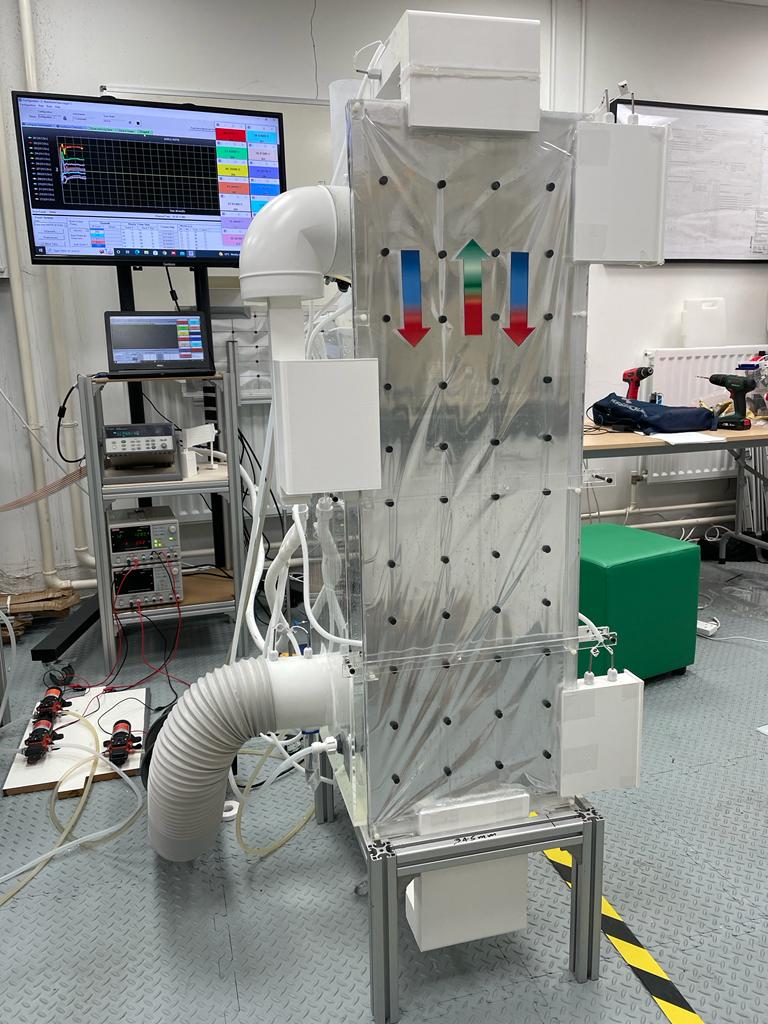
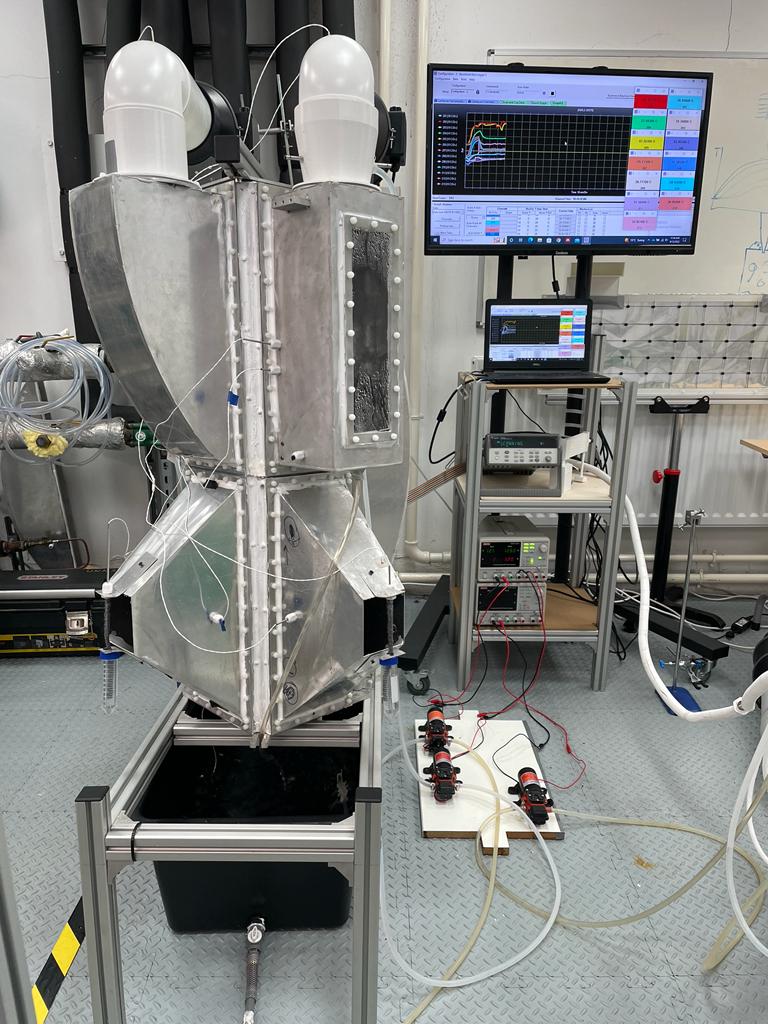
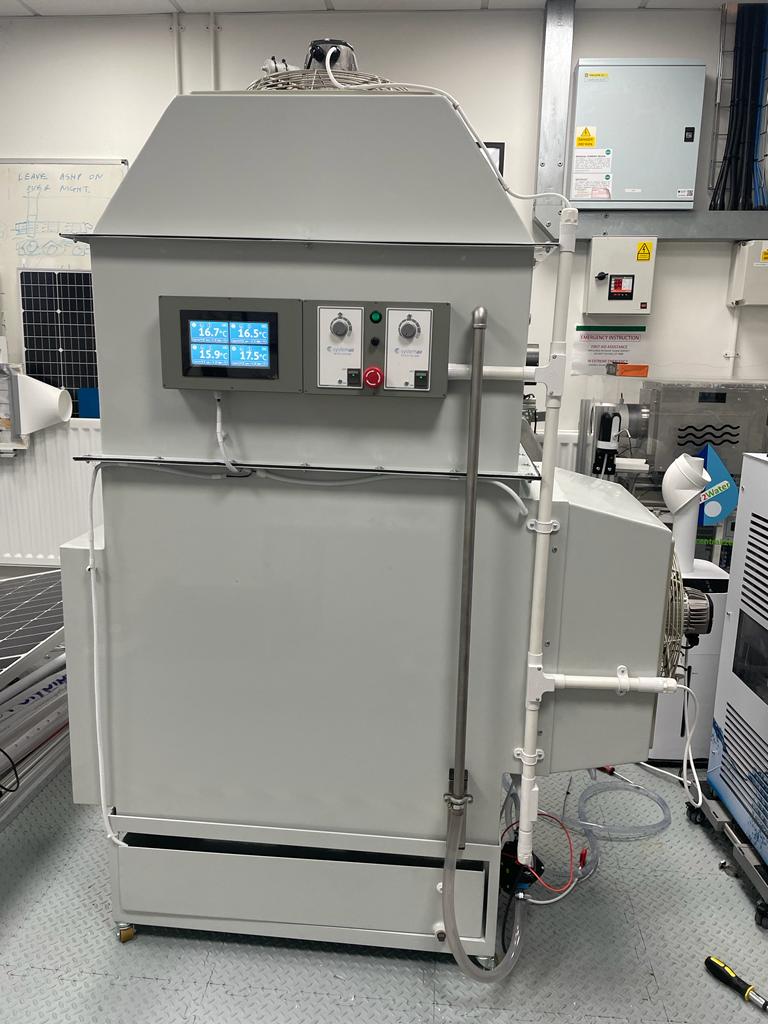
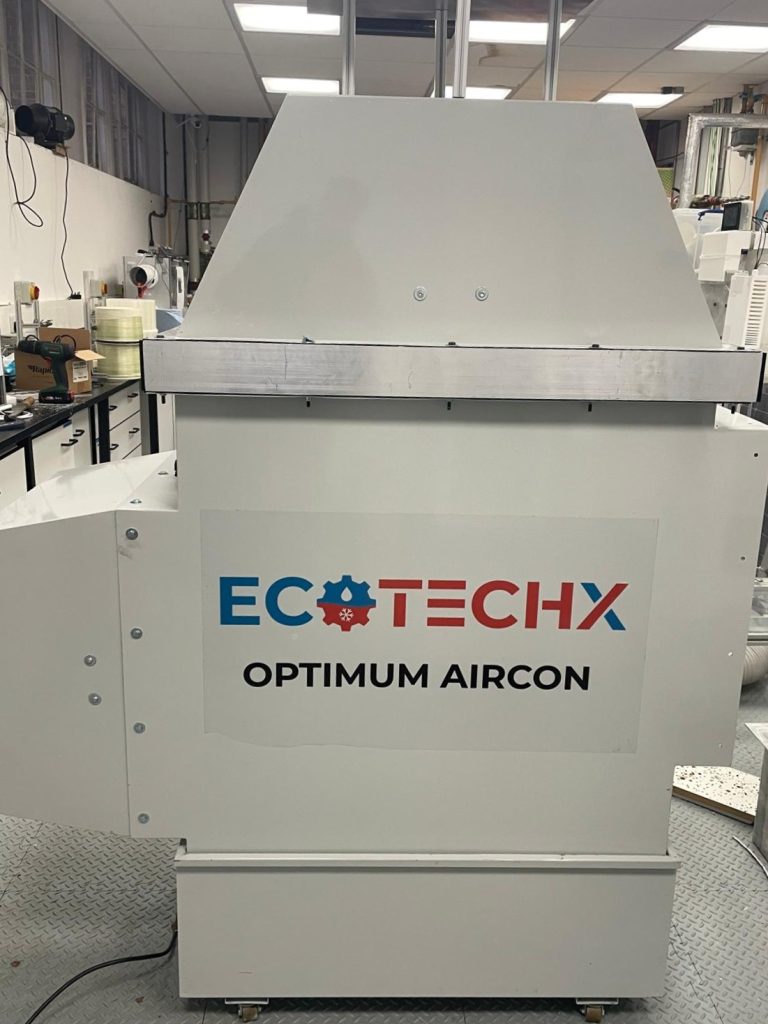
  • Pilot-ready designs and a 3.5 kW prototype successfully constructed

Capacity Building & Knowledge Exchange

S2Cool places strong emphasis on local capacity, inclusion, and long-term sustainability:

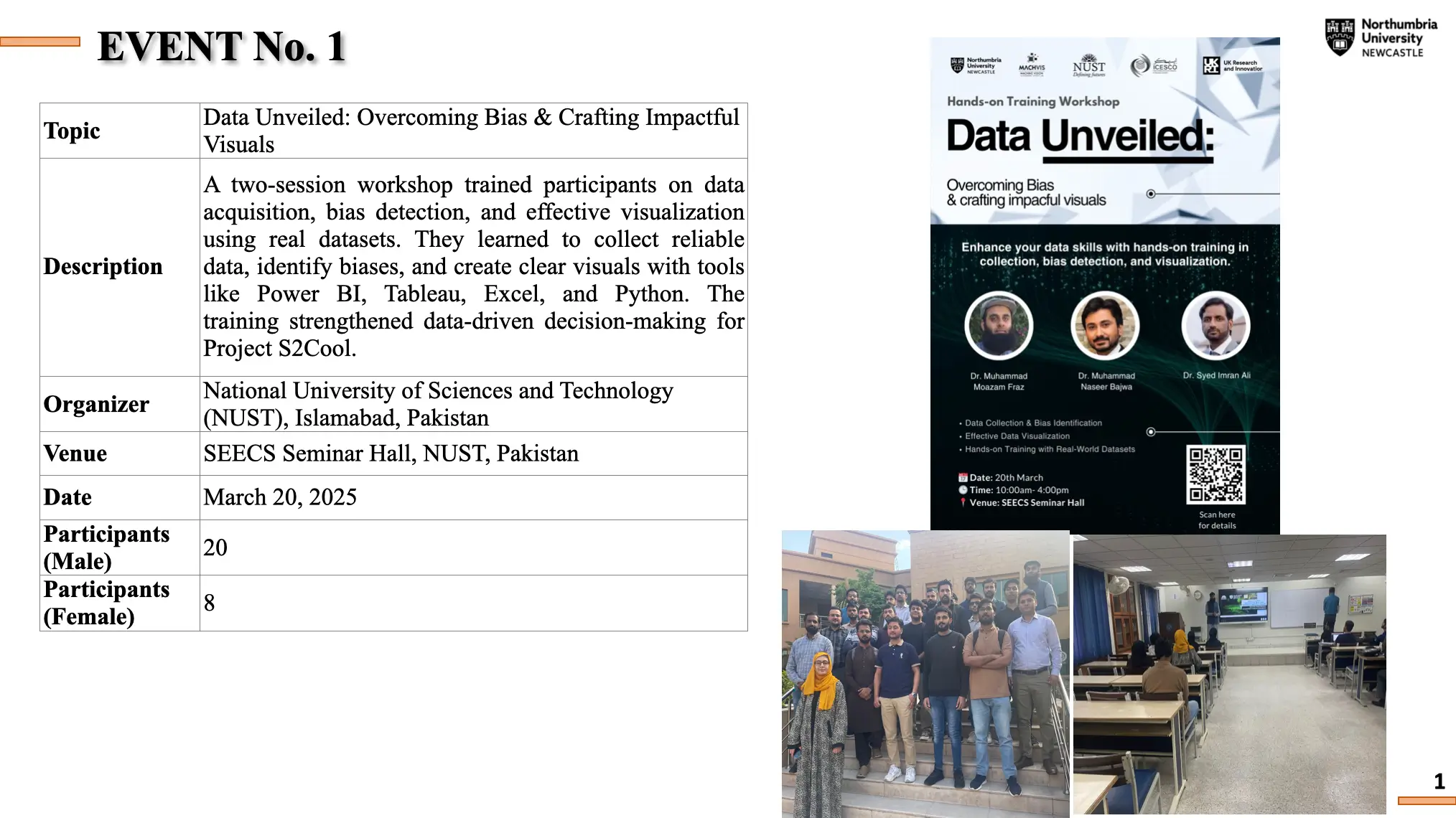
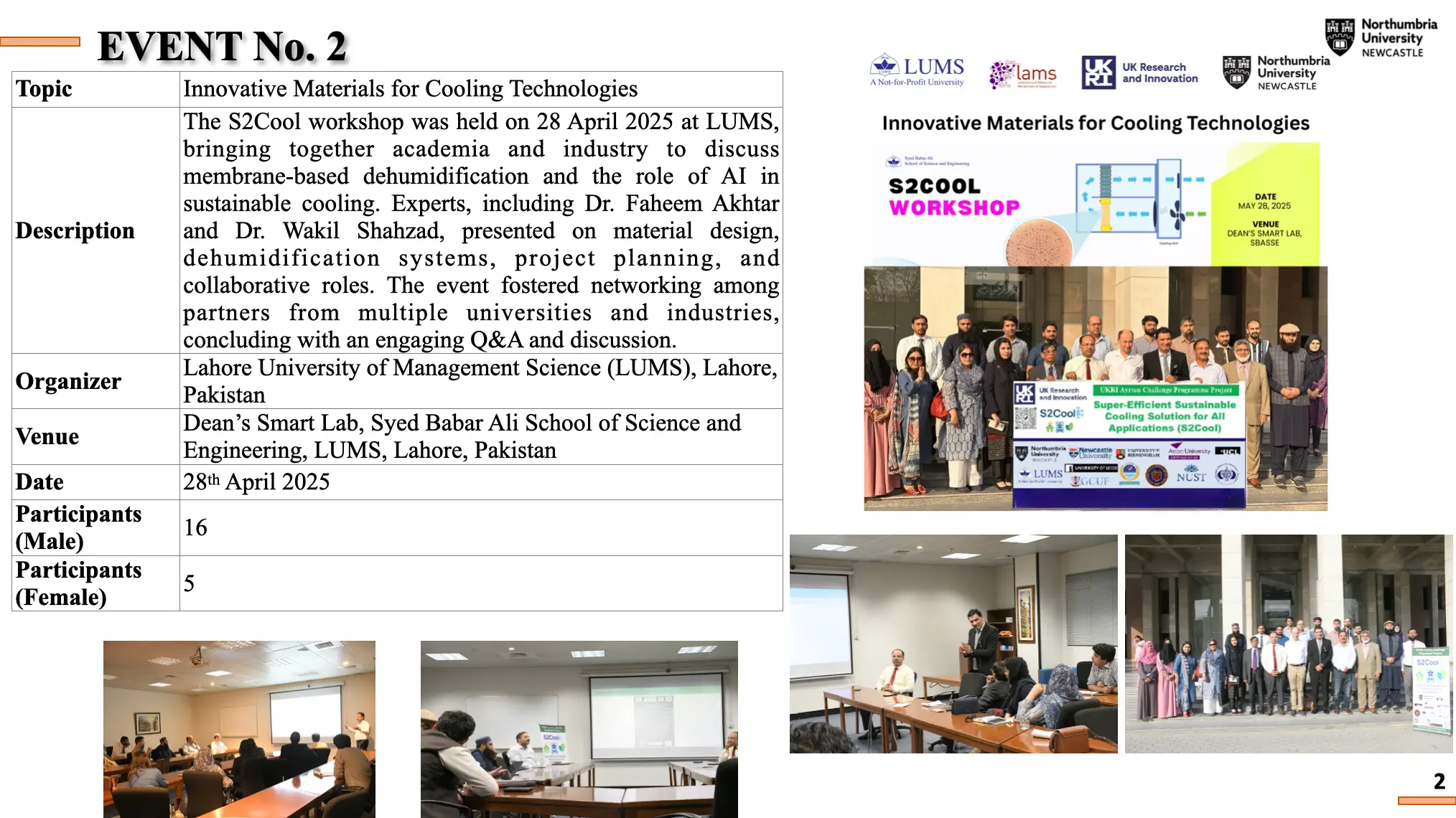
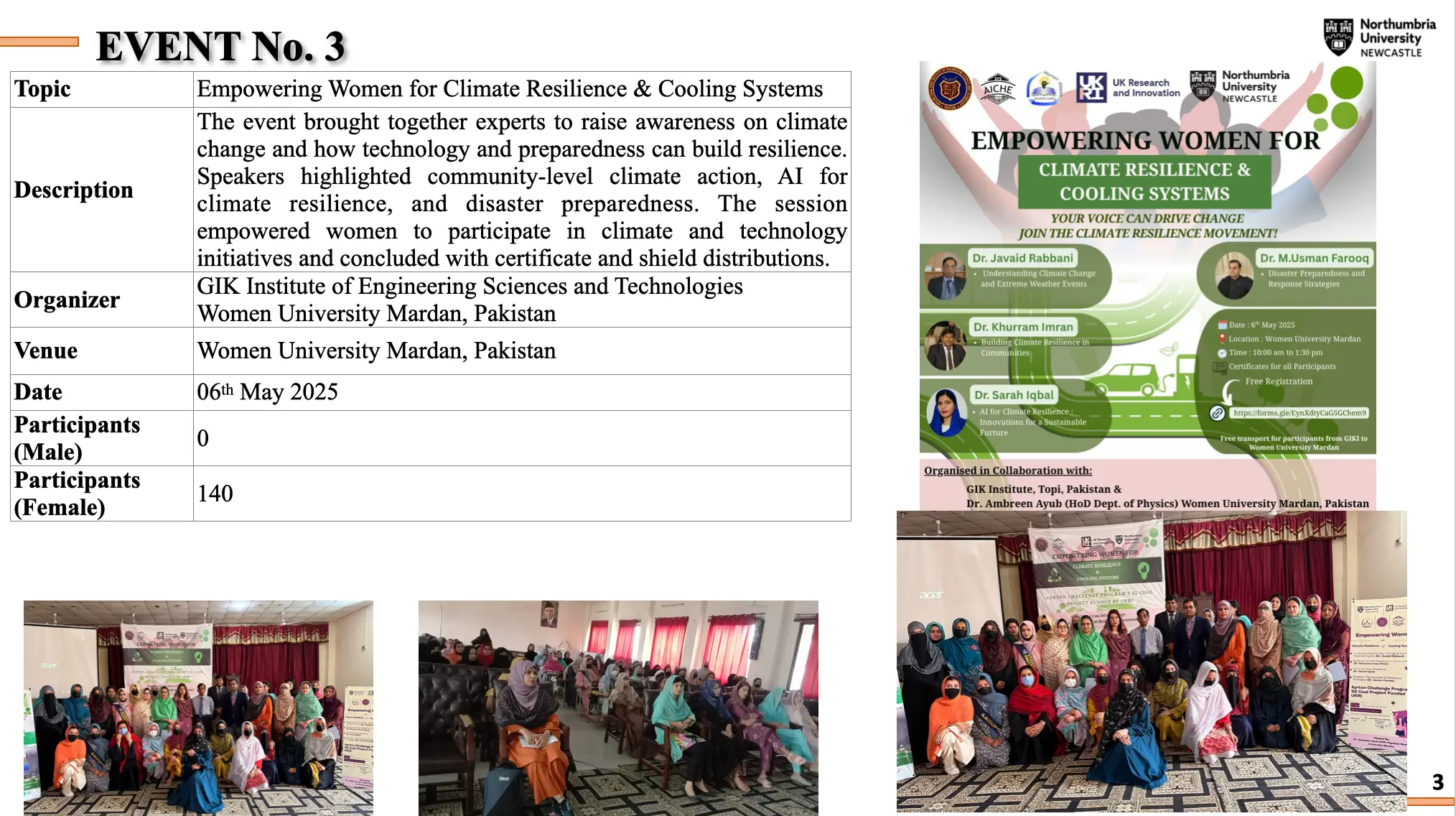
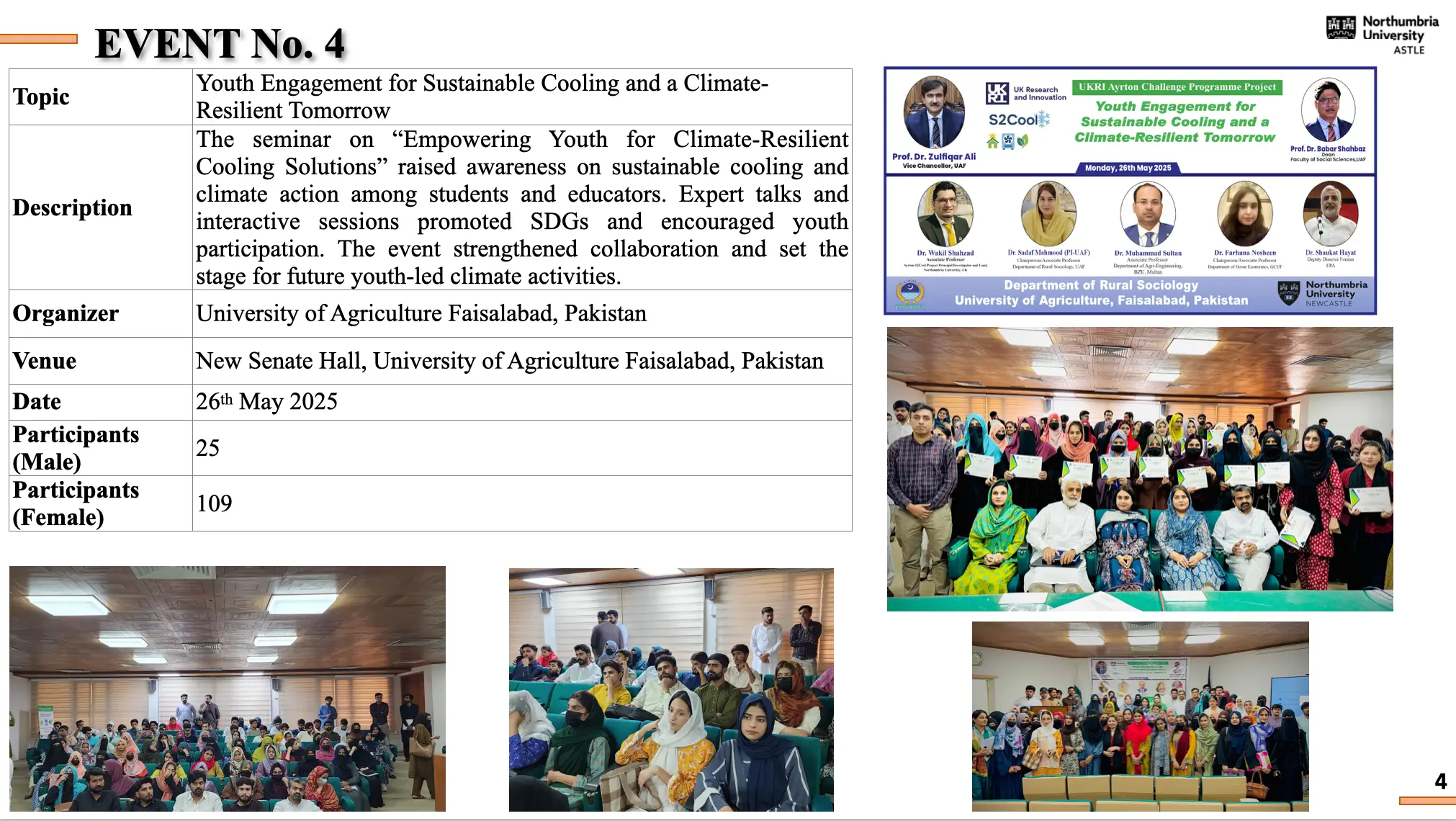
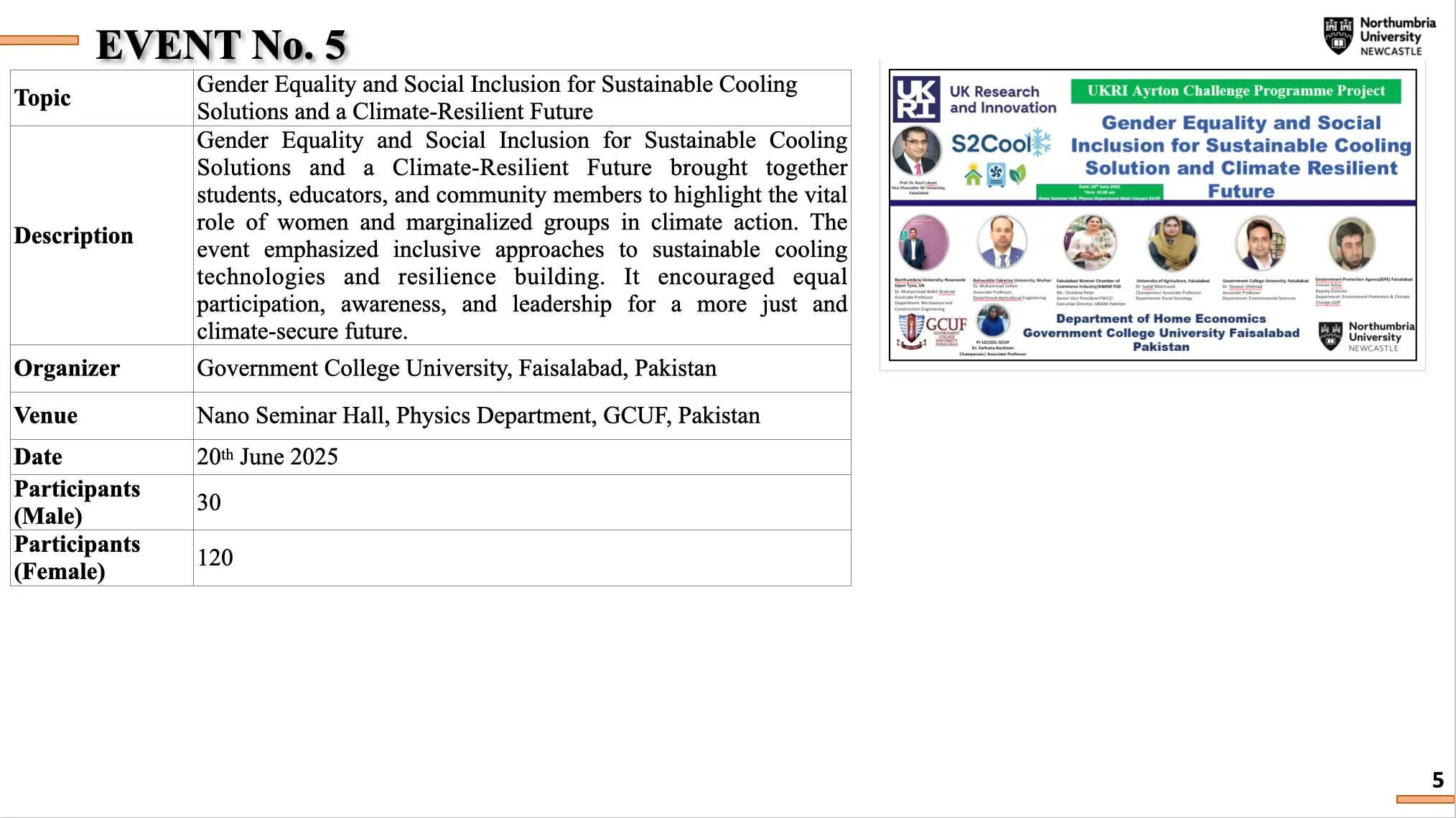
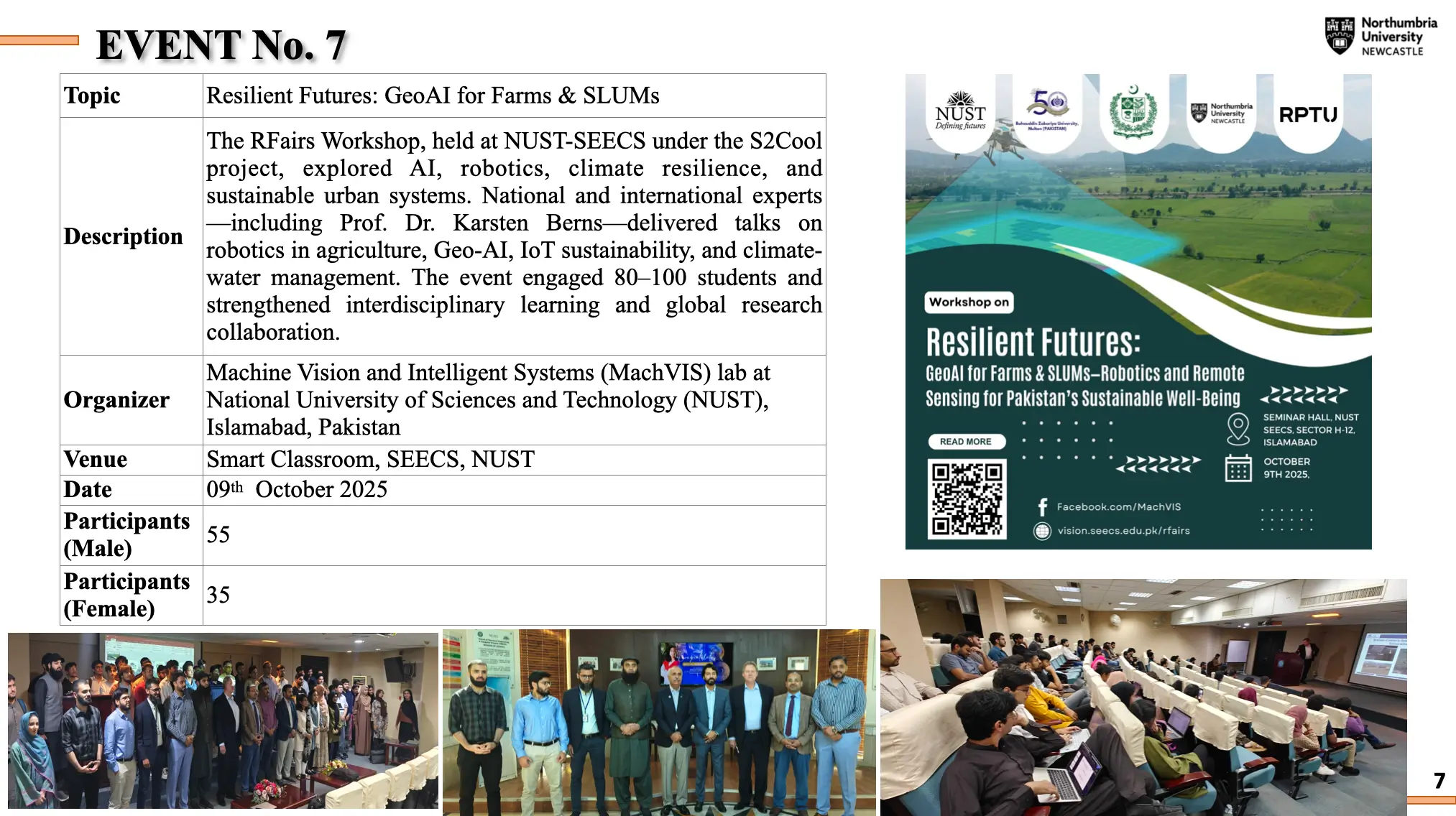
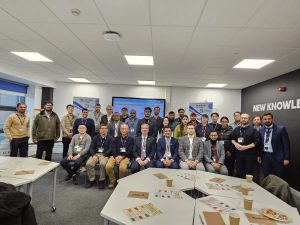
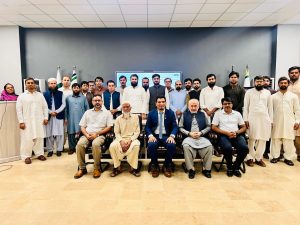
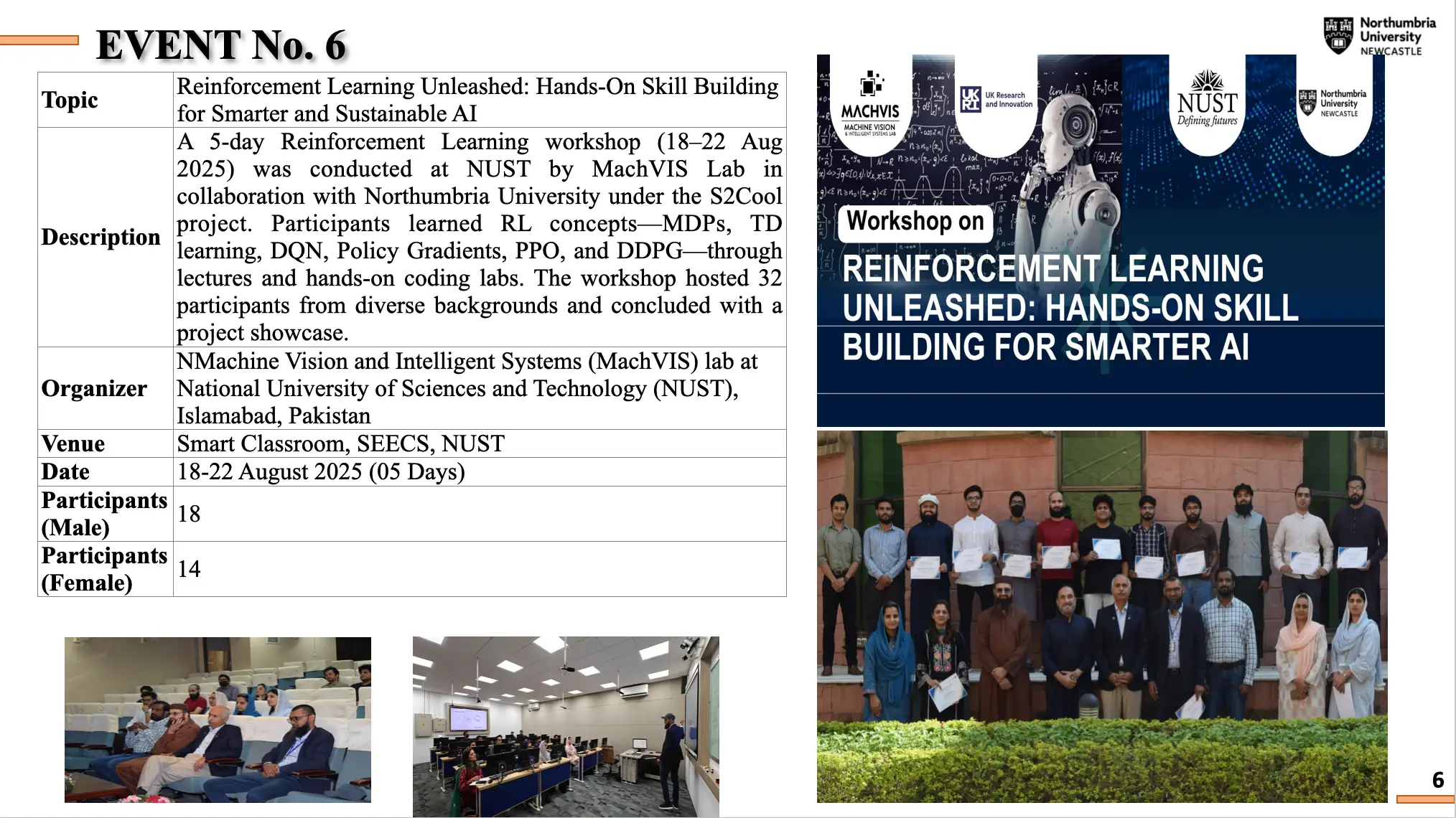
  • 8+ structured workshops delivered across partner institutions
  • 648 participants, including 483 women
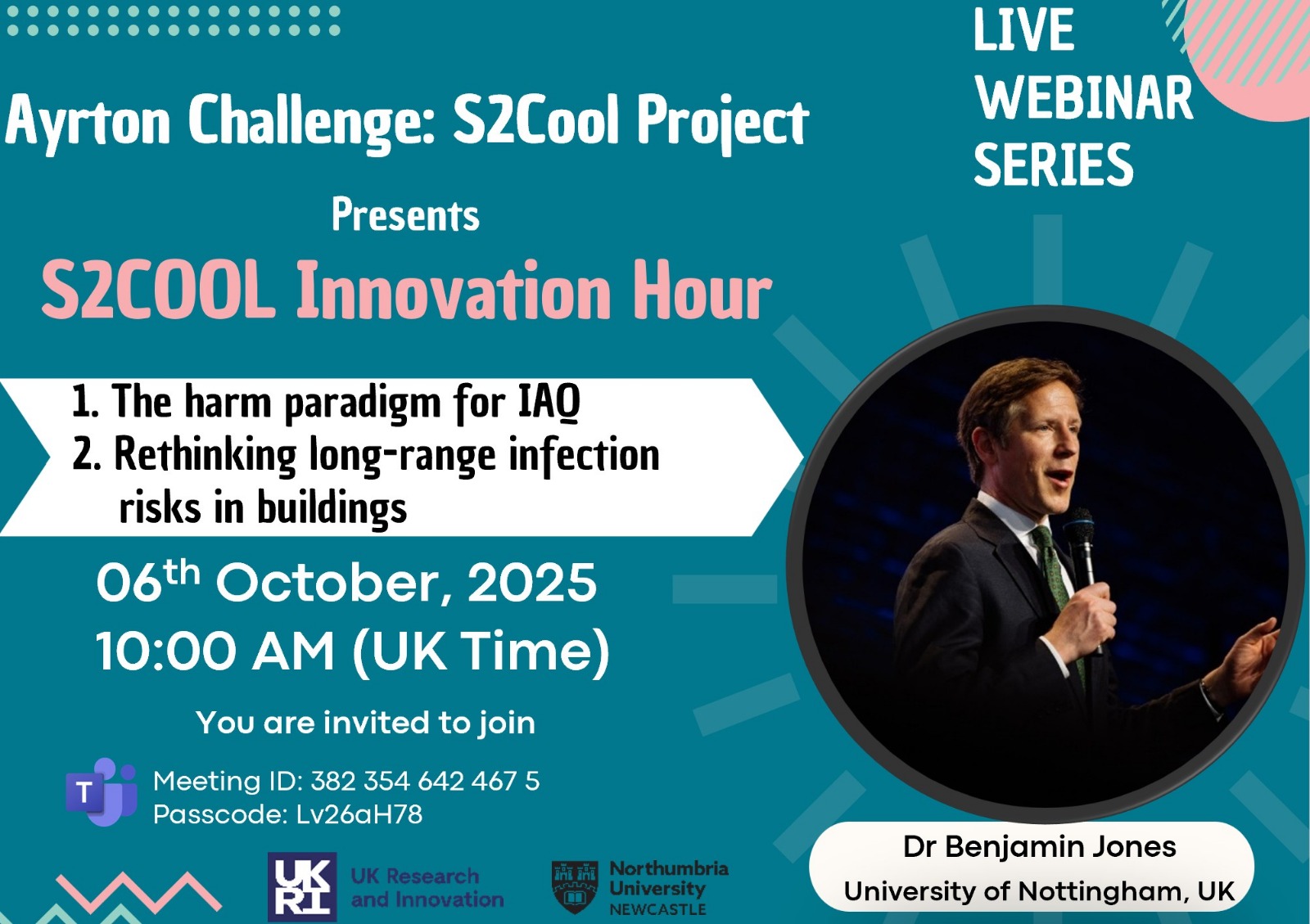
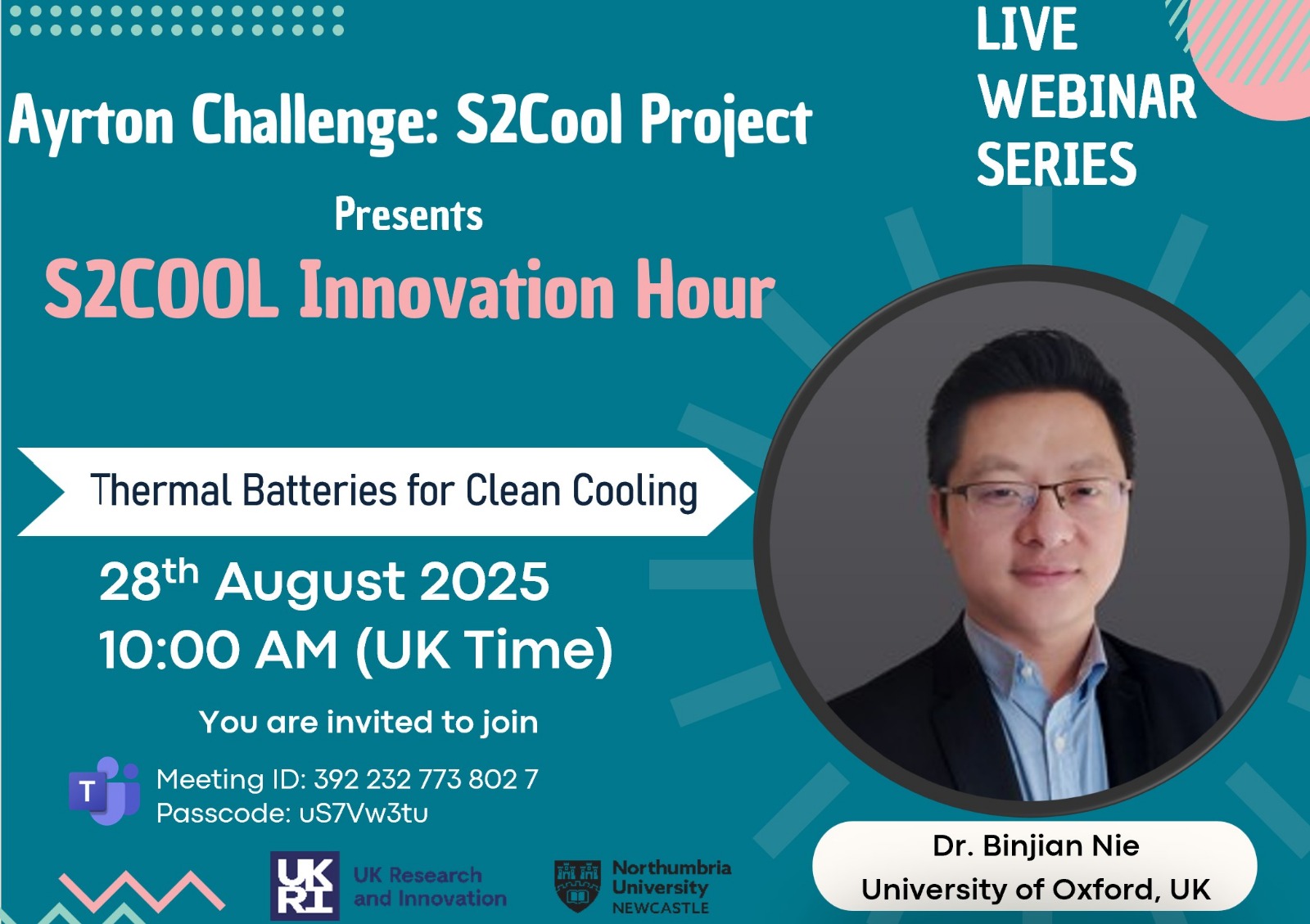
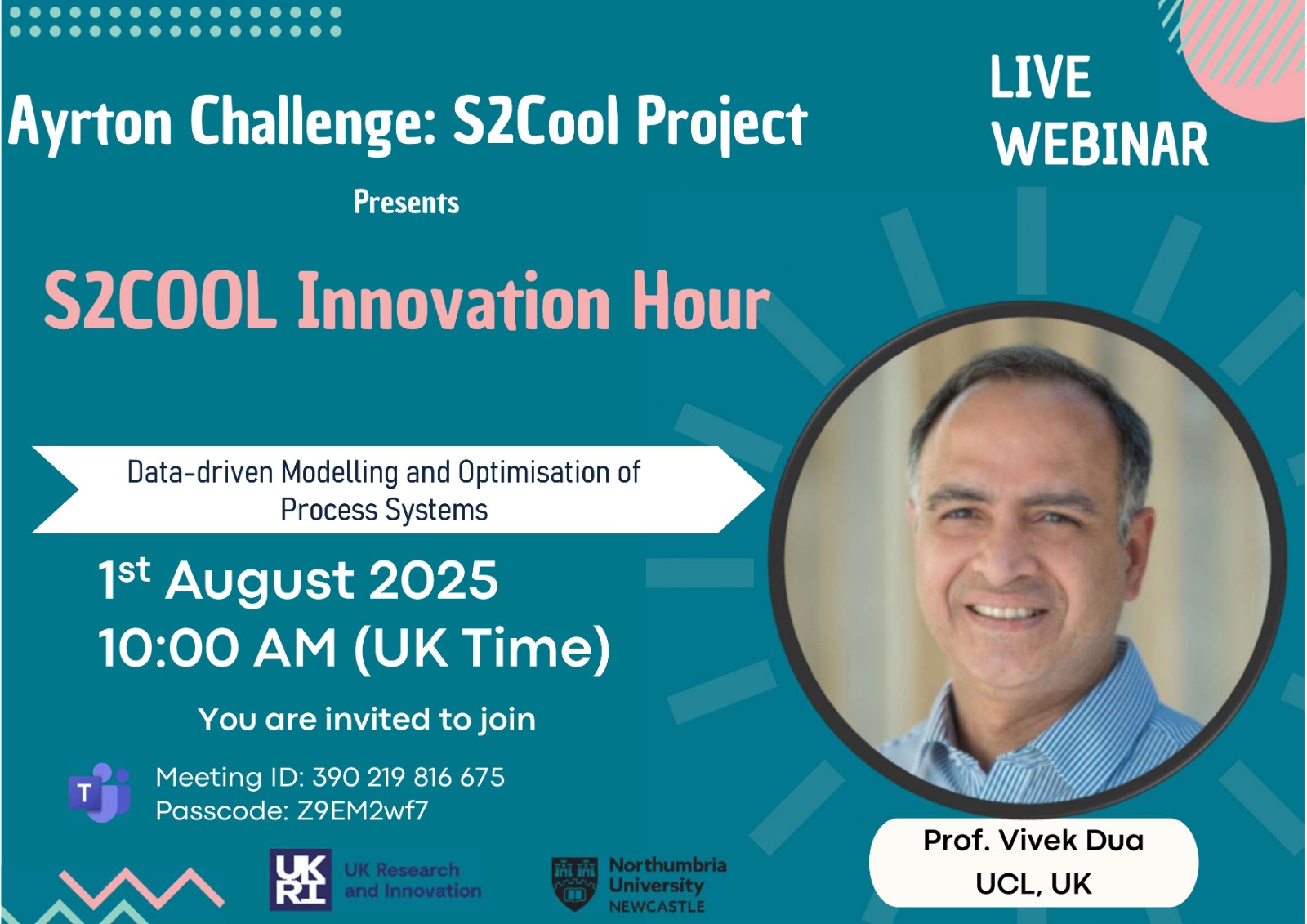
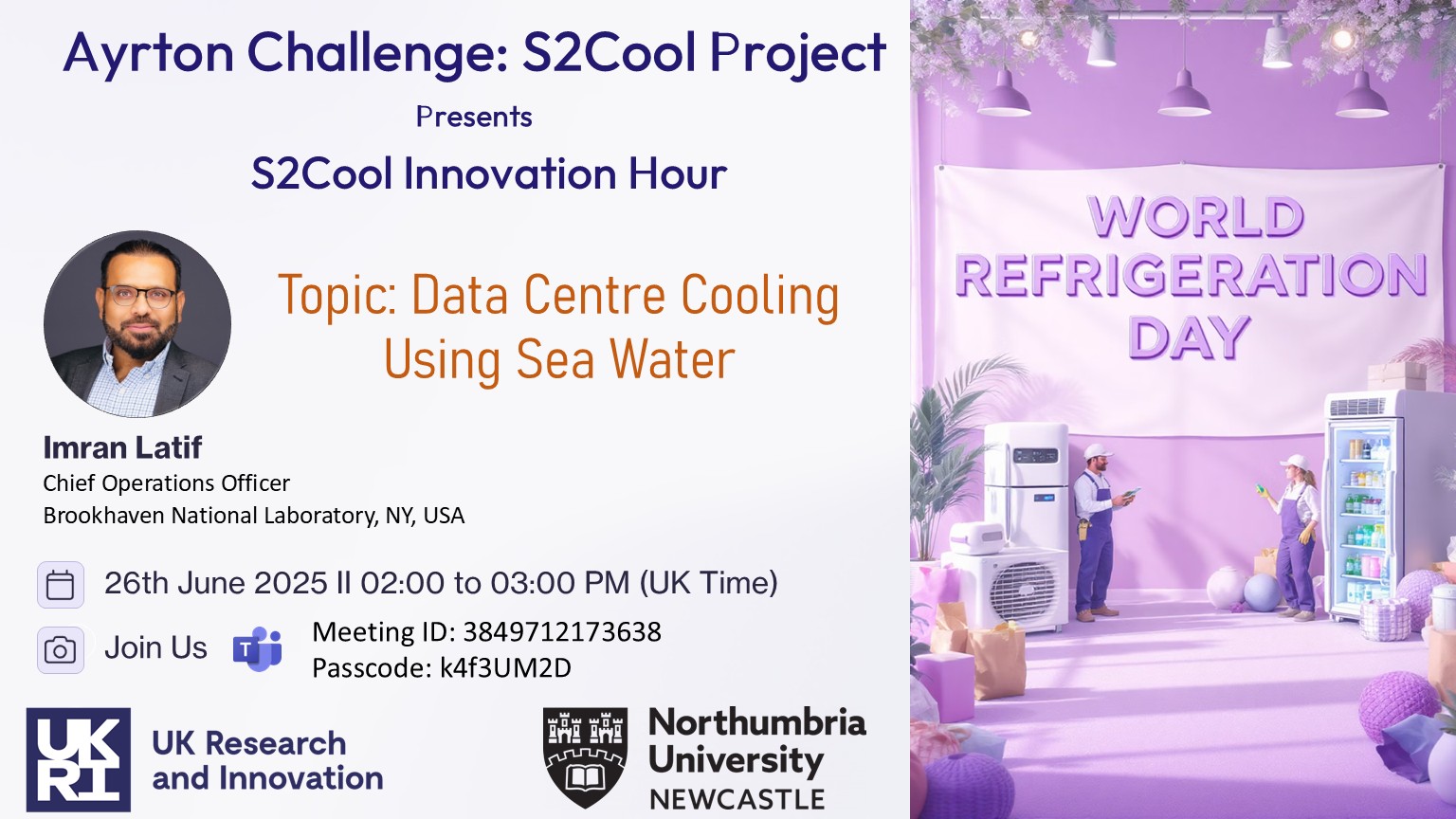
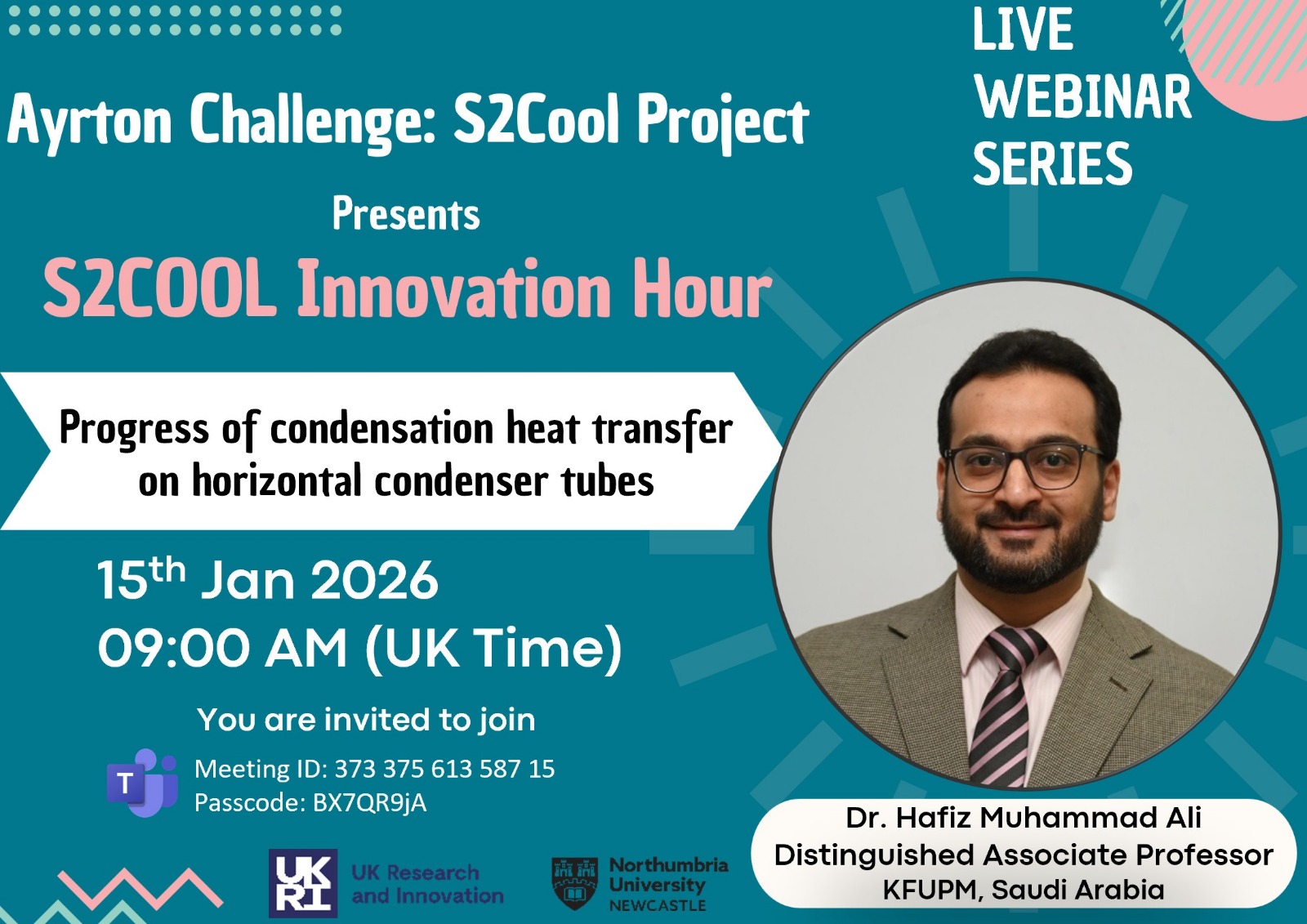
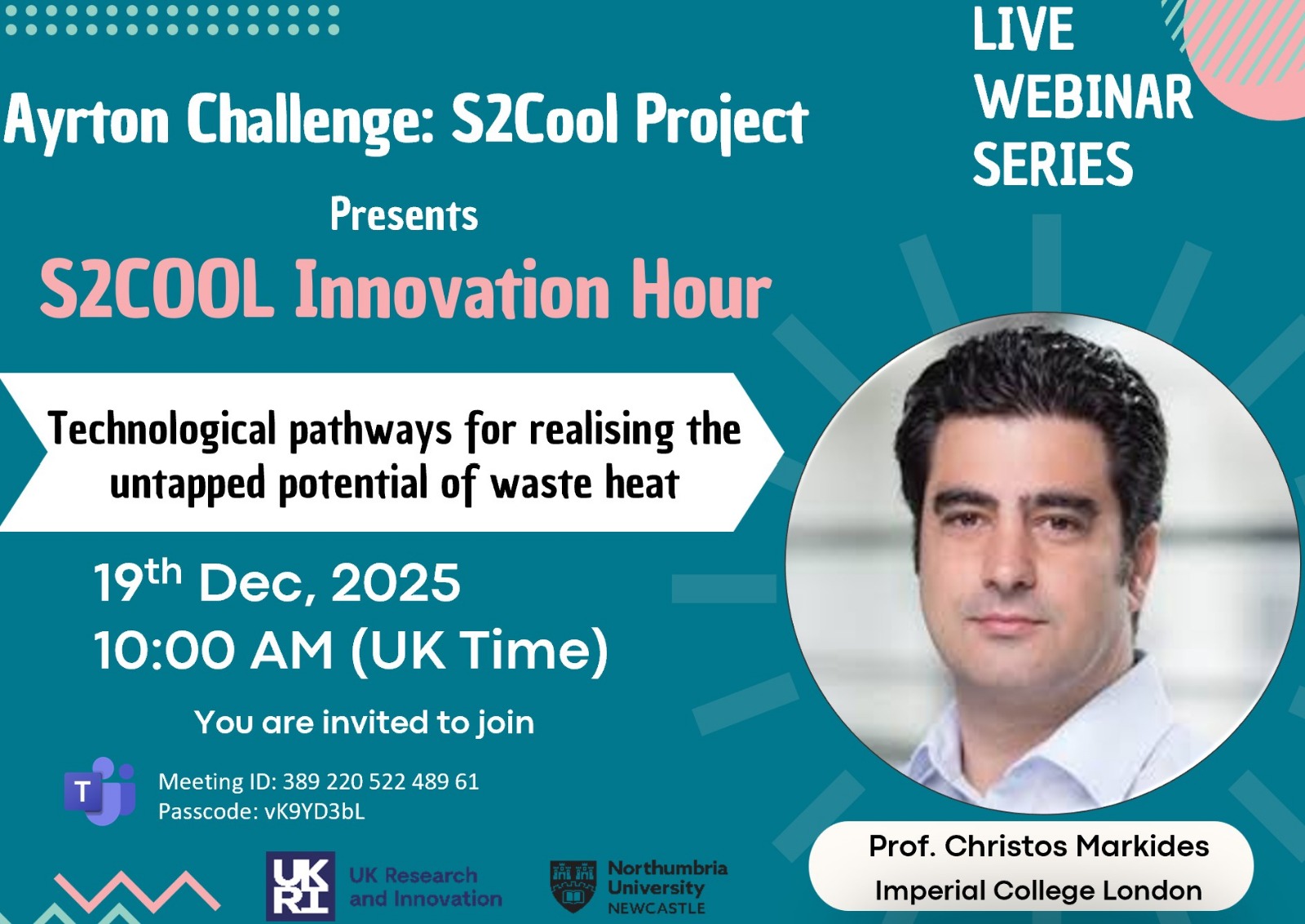
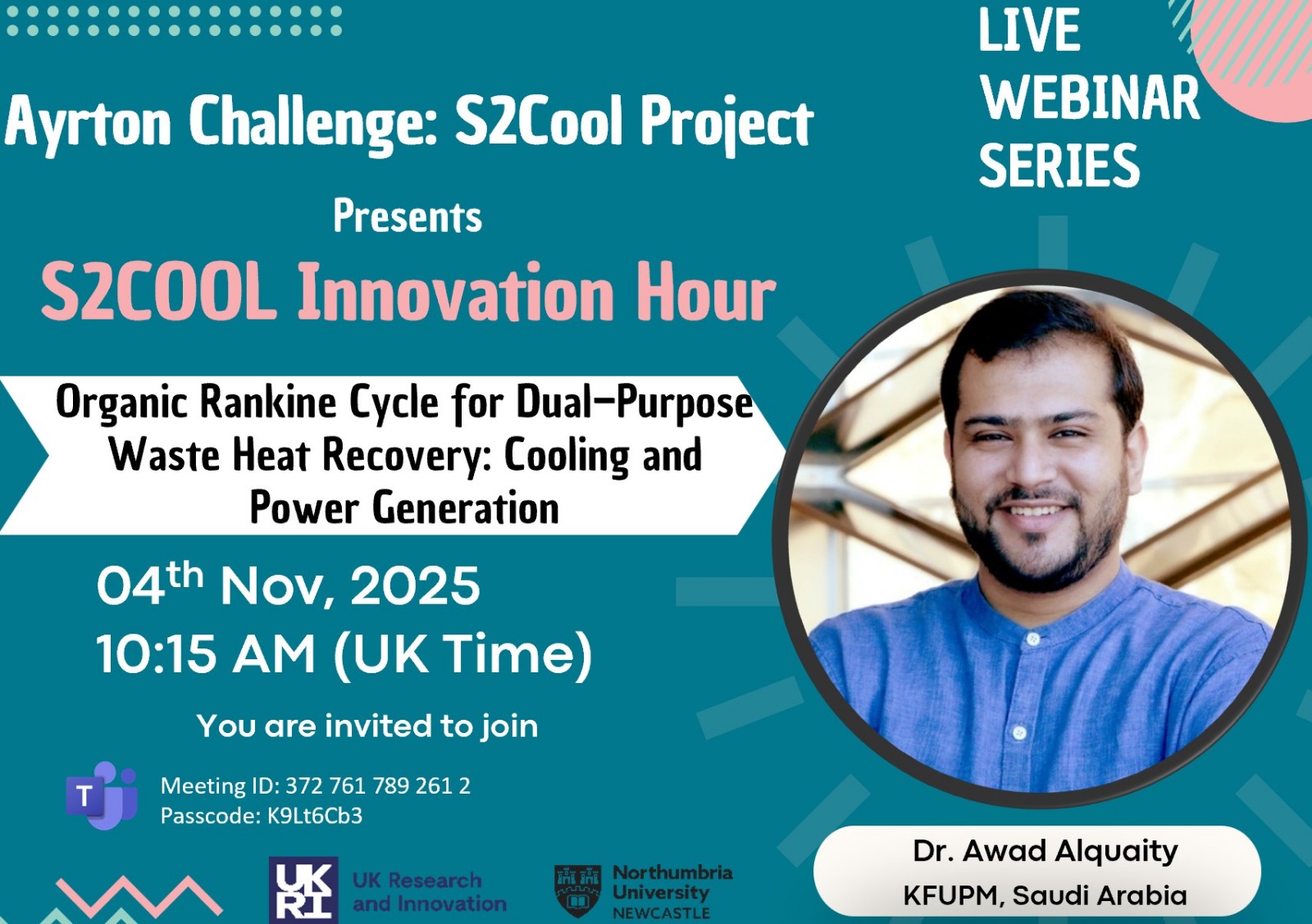
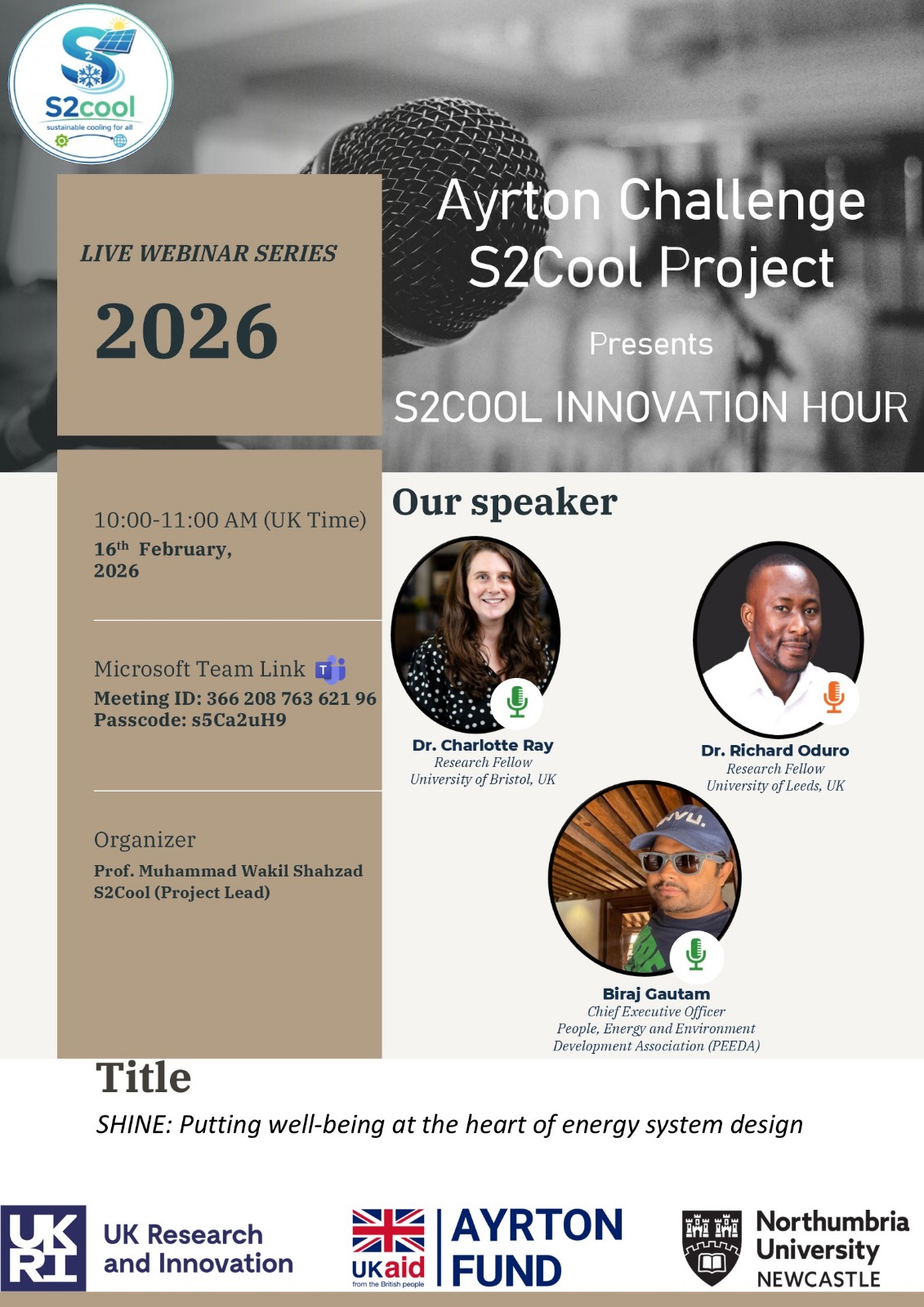
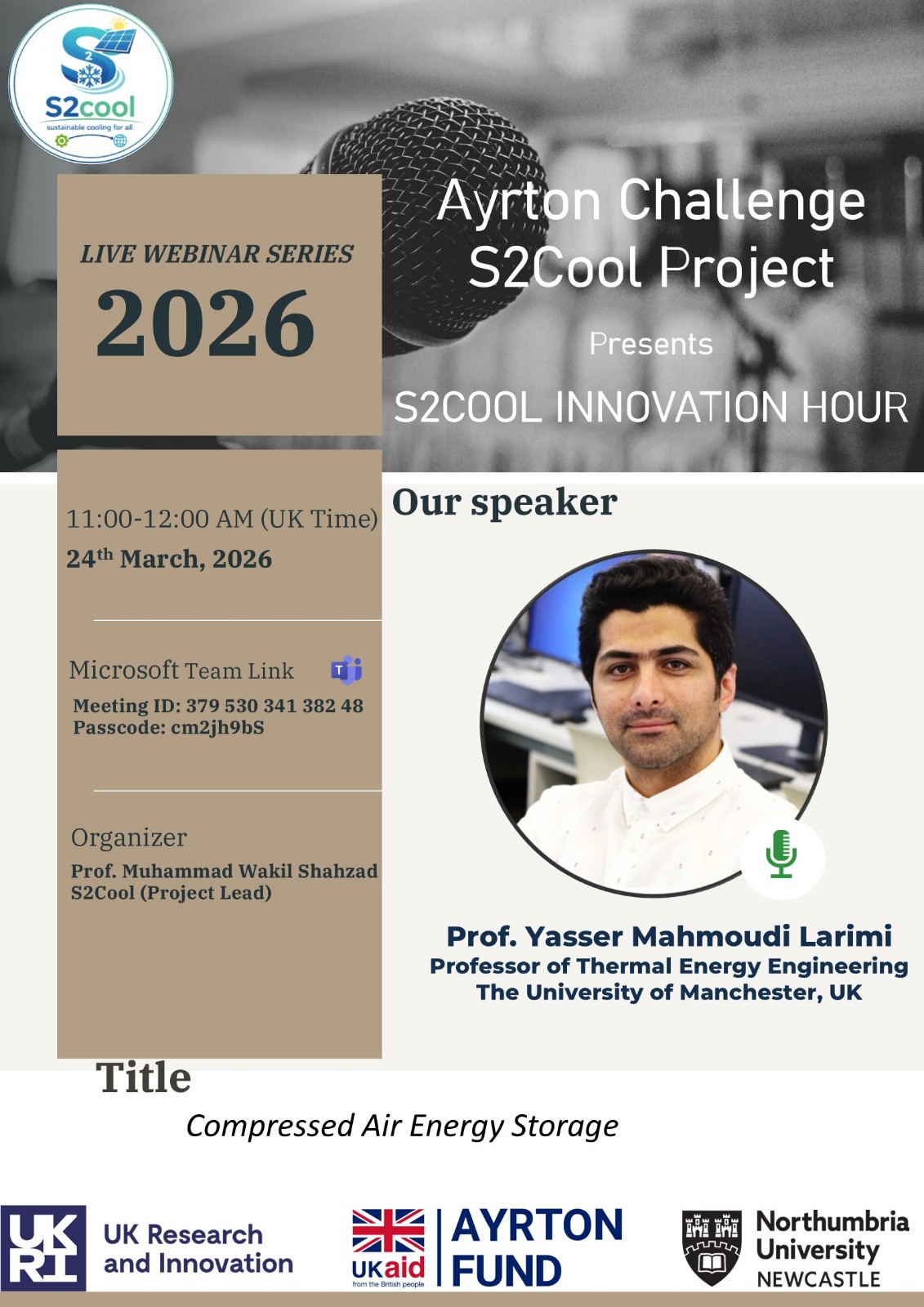
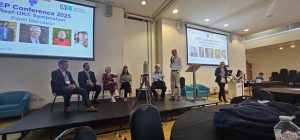
  • Monthly S2Cool Innovation Hour webinars with global experts
  • 385 webinar participants, including 218 women
  • Training for students, early-career researchers, and practitioners
  • Development of the International E-Centre for Sustainable Cooling

Gender Equality & Social Inclusion (GESI)

S2Cool embeds GESI and EDI principles across research, engagement, and impact evaluation:

  • Gender-responsive survey frameworks (700+ responses)
  • Women-focused workshops and training
  • Inclusive technology design considering affordability and access
  • Social-impact evaluation covering health, affordability, and heat vulnerability

Contribution to Sustainable Development Goals

S2Cool directly supports:

  • SDG 7 – Affordable & Clean Energy
  • Super-efficient, renewable-ready cooling with lower energy demand.
  • SDG 13 – Climate Action
  • Emissions reduction, refrigerant-free cooling, and climate-resilient adaptation.
  • Additional contributions to SDGs 3, 5, 9, 11, and 12 through health, gender equality, innovation, sustainable cities, and responsible consumption.

Scaling & Commercialisation

S2Cool is advancing clear pathways for scale-up:

  • Pilot deployment and long-term testing
  • Commercialisation and funding strategies
  • Life-cycle assessment (LCA), ESG, and carbon-pricing frameworks
  • Policy engagement and market-ready supply-chain models

S2Cool is redefining cooling — not by consuming more energy, but by needing far less of it.

04

Interactive Climate Map - Pakistan

05

Partners

Project Lead

UK PARTNERS

INTERNATIONAL PARTNERS

PAKISTAN Partners

06

MOVING FORWARD

S2Cool Role

S2Cool acts as a catalyst for super-efficient, climate-resilient cooling, bridging the gap between research, real-world deployment, and policy uptake. By combining locally co-created technology, AI-enabled optimisation, and inclusive capacity building, S2Cool accelerates the transition away from energy-intensive, refrigerant-based cooling towards affordable, low-carbon alternatives tailored for heat-vulnerable regions.

The project integrates technical innovation with social, environmental, and market considerations to ensure cooling solutions are deployable, scalable, and sustainable beyond the project lifecycle.

Near Term (0–1 Years)

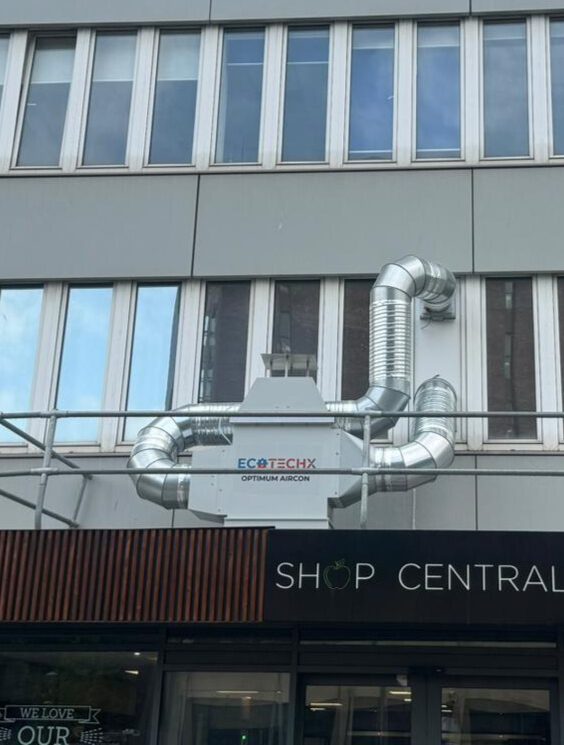
  • Complete pilot installation and long-term testing of NIEC and hybrid NIEC+MVC systems under representative climatic conditions
  • Validate energy, cost, and performance gains through monitored field data and AI-driven analytics
  • Strengthen local manufacturing, installation, and operation capacity through targeted training and workshops
  • Deliver evidence-based performance, health, and affordability metrics to inform policy and investment decisions
  • Expand stakeholder engagement with utilities, industry, policymakers, and community organisations

Medium Term (1–3 Years)

  • Support scale-up and replication of S2Cool systems across multiple regions and use cases (residential, commercial, institutional)
  • Advance commercialisation pathways, including supply-chain development, financing models, and private-sector partnerships
  • Integrate renewable-powered cooling and intelligent control at scale to reduce peak electricity demand
  • Embed life-cycle assessment (LCA), ESG, and carbon-pricing frameworks into market and policy planning
  • Strengthen regional and international knowledge exchange through the International E-Centre for Sustainable Cooling

Long Term (3+ Years)

  • Contribute to system-level transformation of cooling markets, reducing long-term energy demand and emissions
  • Enable widespread access to affordable, refrigerant-free cooling in heat-vulnerable communities
  • Inform national and international cooling strategies, standards, and regulations through robust evidence and best practice
  • Support progress toward SDGs 7 (Affordable and Clean Energy), 3 (Health), 5 (Gender Equality), 11 (Sustainable Cities), and 13 (Climate Action)
  • Establish S2Cool technologies and methodologies as reference solutions for sustainable cooling in the Global South

S2Cool is redefining cooling — not by consuming more energy, but by needing far less of it.

07

MULTIMEDIA

08

IP & DEVELOPMENT STATUS

  • Technology Readiness Level (TRL) 5–6, with core cooling subsystems (NIEC, hybrid NIEC–MVC) designed, prototyped, and validated in relevant operating environments
  • IP generated at component, system-integration, and control-algorithm levels, including novel heat-exchanger configurations, hybrid system architectures, and AI-enabled optimisation frameworks
  • Foreground IP managed under UKRI/Ayrton Challenge governance, with clear ownership, exploitation, and access provisions among consortium partners
  • Experimental, numerical (CFD), and pilot-scale testing completed or underway, supporting performance validation across representative climatic conditions
  • Strong pathway to TRL 7–8, including pilot demonstrations, manufacturing optimisation, and deployment-ready system designs targeted at heat-vulnerable regions
Scroll to Top