Ensuring Water Quality & Security through Smart RO Monitoring
01
Synopsis
The i-CONNECTOR project is an industry-led innovation developed through a Knowledge Transfer Partnership (KTP) between Northumbria University and Salt Separation Services Ltd, supported by Innovate UK.
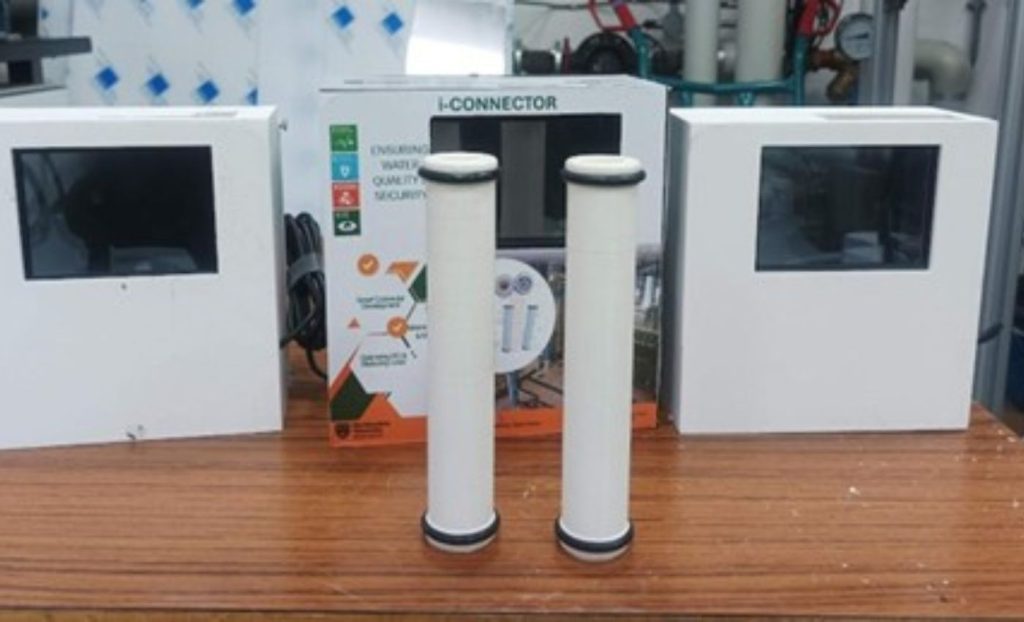
The project delivers a smart, energy-efficient interconnector for reverse osmosis (RO) membrane systems, enabling real-time, wireless detection of underperforming membrane elements.
By transforming conventional “blind” RO interconnectors into intelligent sensing components, i-CONNECTOR enables targeted membrane replacement, significantly reducing operational costs, material waste, and unplanned plant downtime—while improving water quality reliability and system sustainability.
The innovation directly supports water security, industrial efficiency, and climate action, addressing a critical gap in modern desalination and water-treatment infrastructure.
i-CONNECTOR at a Glance
1st-of-its-kind smart RO interconnector
Wireless detection of faulty membranes at element level
£600–£700 per membrane saved
Avoids unnecessary replacement of healthy RO membranes
Up to 60% waste reduction
By extending membrane life and preventing bulk disposal
125 kHz RFID-based sensing
Reliable signal penetration through saline water and pressure vessels
Industrial-ready prototype
Tested with full-scale RO membranes and pressure vessels
Why Smart Water Infrastructure Matters
2.3 billion people
live in water-stressed countries, with demand expected to exceed supply by 40% by 2030
14,000+ tonnes/year
of spent RO membranes are discarded globally, mostly incinerated
High energy & material intensity
of desalination increases costs, emissions, and environmental impact
Lack of membrane-level diagnostics
forces operators to replace entire membrane stacks instead of individual faulty elements
02
CHALLENGE
Reverse osmosis is the backbone of global desalination and industrial water treatment, yet current RO systems lack the ability to monitor individual membrane performance. Water quality is typically assessed only at the outlet of pressure vessels, offering no visibility into which membrane elements are failing.
As a result, when performance declines, operators routinely replace all membranes in a vessel, even when most remain functional. This practice leads to:
- High operational expenditure
- Premature disposal of usable membranes
- Increased energy consumption
- Higher carbon and material footprints
Without innovation at the component level, RO systems will continue to face escalating costs and sustainability challenges—undermining progress toward SDG 6 (Clean Water) and SDG 13 (Climate Action).
Final report – KTP Project
Why the Challenge Persists
Orphaned
Invisible
Expensive
03
APPROACH & RESULTS
Approach
Smart Interconnector Design
- Passive RFID tag embedded within the RO interconnector
- No structural modification to existing RO membranes or pressure vessels
- Drop-in replacement for conventional interconnectors
Wireless Salinity Detection
- Uses standing wave ratio (SWR) variations to detect changes in permeate salinity
- Identifies underperforming membranes by comparative signal deviation
- Eliminates need for powered sensors inside the vessel
Frequency Optimisation
- Extensive testing at 868 MHz, 13.56 MHz, and 125 kHz
- 125 kHz selected for superior penetration through:
- High-salinity water
- Polymeric membranes
- Thick industrial pressure vessels
Enhanced Sensitivity via Advanced Coatings
- PDMS protective coating for stability
- Nafion-based ionic enhancement for salinity sensitivity
- PDMS–Nafion composite delivers strongest SWR differentiation
Results
Demonstrated Outcomes
- Accurate identification of faulty membrane elements
- Reduction in unnecessary membrane disposal
- Lower energy demand from avoided over-pressurisation
- Improved plant uptime and maintenance efficiency
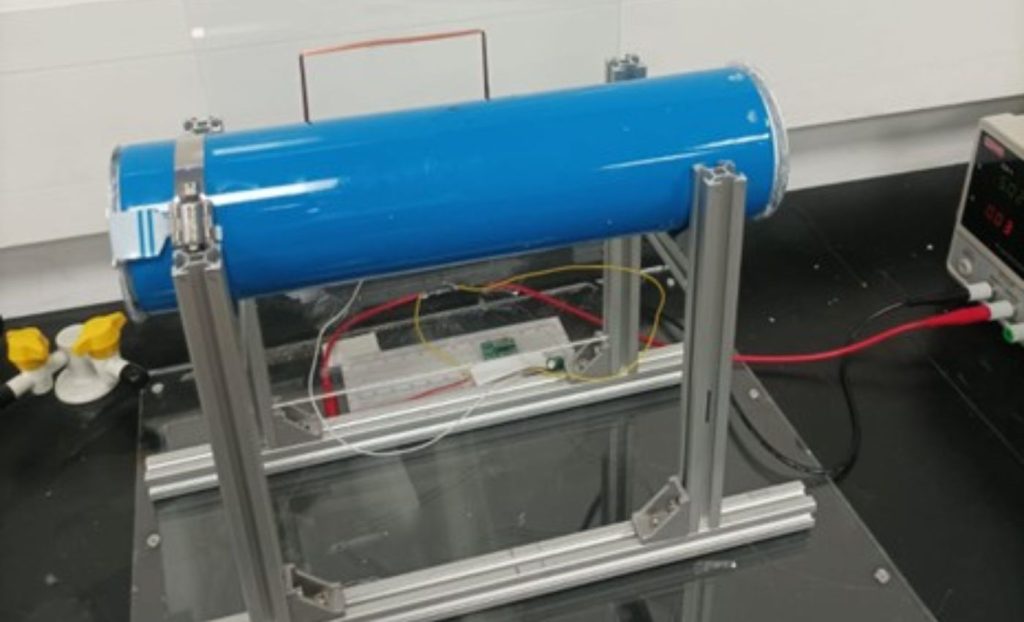
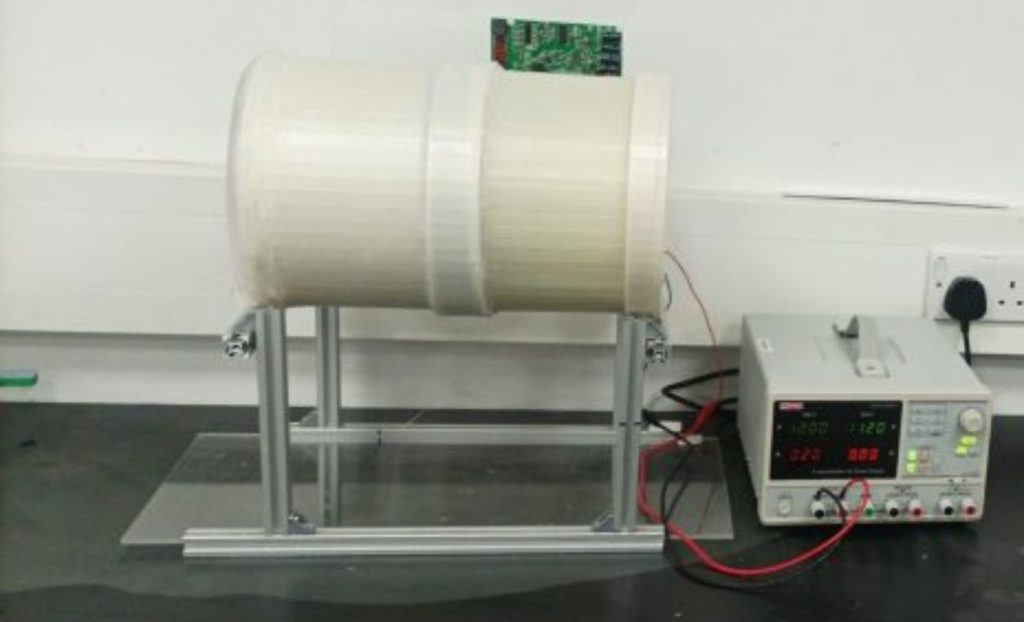
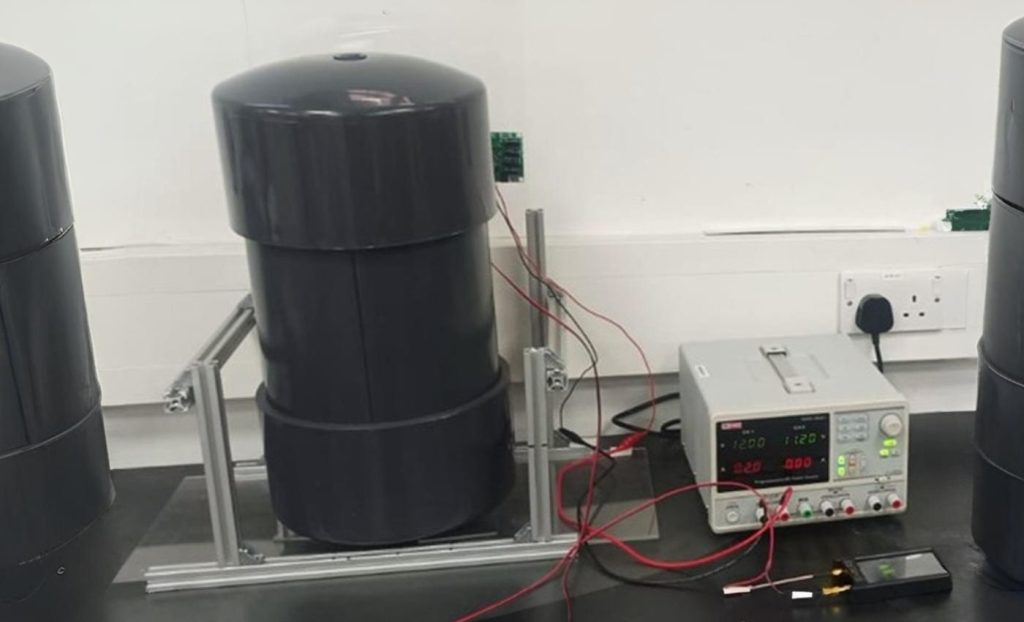
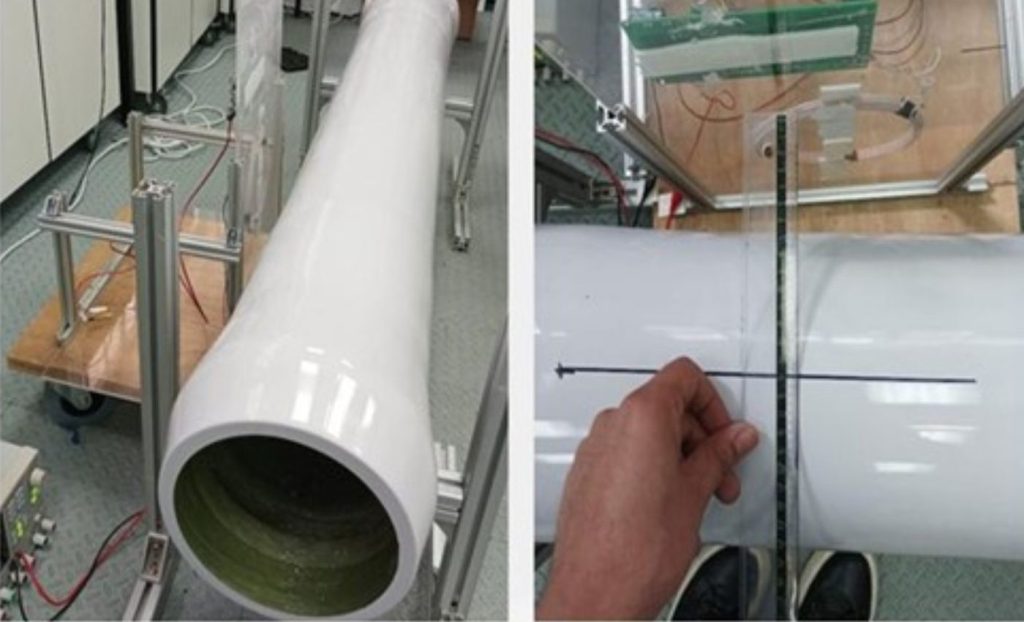
- Industrial-scale prototypes validated under realistic RO conditions
Final report – KTP Project
S2Cool is redefining cooling — not by consuming more energy, but by needing far less of it.


05
MOVING FORWARD
i-CONNECTOR Role
i-CONNECTOR acts as a key enabler of intelligent, sustainable water infrastructure, bridging the gap between mechanical RO components and smart diagnostics. By embedding sensing capability directly into existing systems, the project enables predictive maintenance, circular-economy practices, and long-term cost reduction across the water sector.
Near Term (0–1 Years)
- Pilot deployment in operational RO plants
- Validation of cost savings and maintenance reduction
- Refinement of insert-based retrofit design
- Industry demonstrations and operator training
Medium Term (1–3 Years)
- Commercial scaling through OEM and system-integrator partnerships
- Integration with digital plant monitoring platforms
- Lifecycle assessment (LCA) and ESG alignment
- Expansion to wastewater treatment and industrial reuse systems
Long Term (3+ Years)
- Widespread adoption across desalination and water-treatment markets
- Significant reduction in membrane waste and carbon emissions
- Contribution to SDGs 3, 6, 9, 12, and 13
- Establishment of i-CONNECTOR as a reference smart-component solution for RO systems
i-CONNECTOR is redefining water treatment — not by producing more water, but by wasting far less of it.
06
MULTIMEDIA


- https://doi.org/10.1016/j.icheatmasstransfer.2025.110321
- https://doi.org/10.1016/j.icheatmasstransfer.2025.109628
- https://doi.org/10.1016/j.icheatmasstransfer.2025.109408
- https://doi.org/10.1016/j.icheatmasstransfer.2025.109176
- https://doi.org/10.3390/agriengineering7070222
- https://doi.org/10.1016/j.icheatmasstransfer.2025.108814
- https://doi.org/10.1016/j.rineng.2025.104540
- https://doi.org/10.1016/j.icheatmasstransfer.2025.110321
- https://doi.org/10.1109/FIT67061.2025.11333636
06
IP & DEVELOPMENT STATUS
- TRL 7–8 (Industrial Prototype Demonstrated) with fully functional smart interconnector systems validated under laboratory and representative industrial reverse osmosis (RO) conditions
- Patent application submitted, protecting the smart interconnector architecture, RFID-based sensing integration, and diagnostic methodology
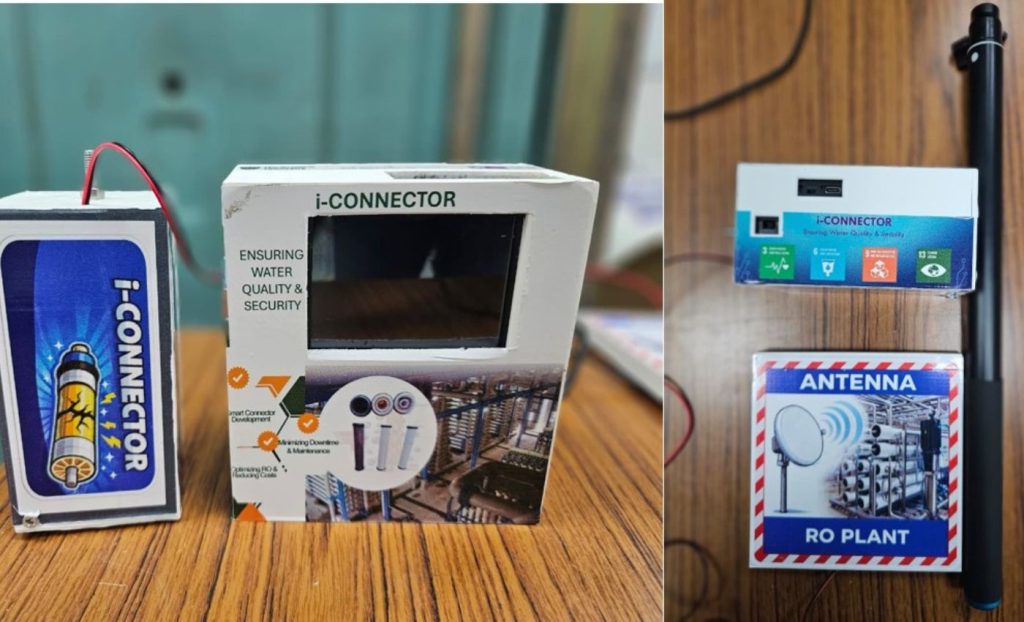
- Industrial-grade prototypes fabricated and tested, including 3D-printed and injection-mould–ready designs validated through signal penetration testing, coating optimisation (PDMS–Nafion hybrid), and CFD-based pressure-drop analysis
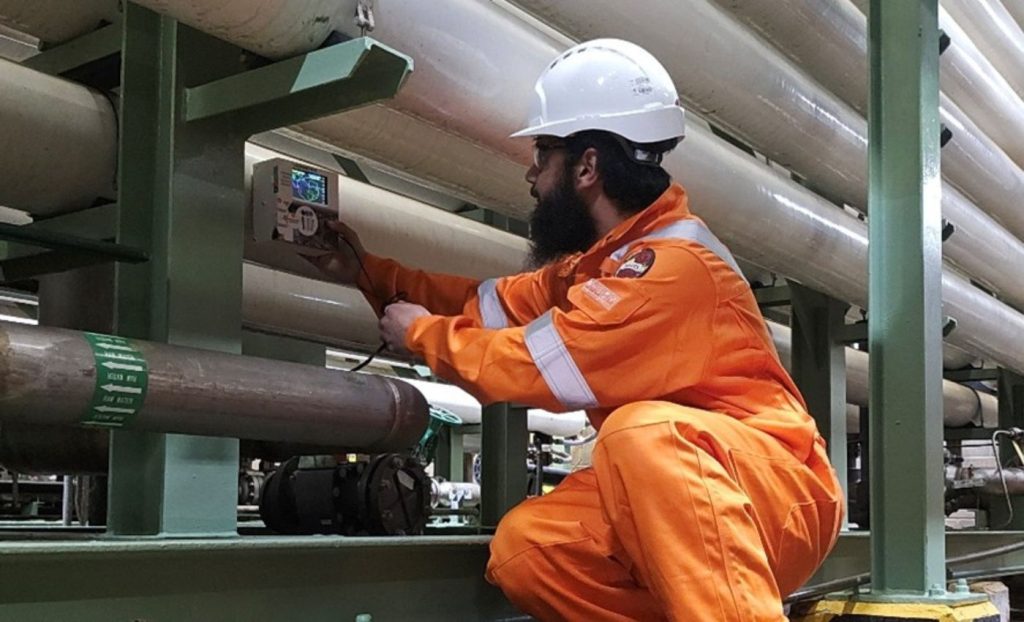
- Wireless membrane performance monitoring successfully demonstrated, enabling detection of underperforming RO membrane elements without structural modification to pressure vessels
- Mobile application and NanoVNA-based diagnostic platform developed, supporting real-time performance comparison and fault identification
- Commercialisation framework established, including economic analysis, business model canvas, and defined pathways for OEM licensing, direct sales, and strategic partnerships